

Grow Local Customers in Launceston
Local SEO is how Launceston businesses get found by people nearby. This guide focuses on the highest‑impact, practical website and listing changes you can make right away to accelerate local growth. We cover Google Business Profile setup, consistent local citations, review management, key on‑page fixes and pragmatic ways AI can help — with clear steps you can use today.
Why local SEO matters for Launceston businesses
Local SEO controls how visible your business is to people searching in and around Launceston. Because many customers look for nearby services when they’re ready to buy, ranking well locally drives more visits, calls and bookings. Optimising for local intent puts your business in front of the right customers at the right time.
Key benefits of local search optimisation in Launceston
Local search optimisation brings measurable, practical benefits:
- More visibility: Show higher in searches from people looking for services in Launceston and neighbouring suburbs.
- Increased foot traffic: Better visibility turns into more people visiting your premises or calling to book.
- Higher conversion rates: Local intent converts better than untargeted traffic, so your marketing works harder.
These wins make local SEO a priority if you want to stay competitive in the Launceston market.
Optimise your Google Business Profile for Launceston results

A well-set-up Google Business Profile is one of the quickest levers to boost local visibility. When your listing is accurate, complete and active, you’re far more likely to appear in the Local Pack and receive genuine enquiries.
How to claim and verify your Google Business Profile
Follow these steps to claim and verify your listing:
- Open the Google Business Profile dashboard: Sign in at the Google Business Profile site with the Google account you’ll use to manage the listing.
- Claim your business: Search for your business name. If it appears, claim it; if not, choose “Add your business.”
- Verify: Choose a verification method — postcard, phone or email — and complete the verification steps.
Verification confirms your details and increases trust from customers and search engines.
Improve your listing with local copy and photos
Make your profile useful and search-friendly by adding localised text and high‑quality images. Practical steps:
- Use local keywords: Include “Launceston” and nearby suburbs in your description, service lines and posts to match local queries.
- Add photos: Upload clear images of your premises, team and products so people recognise your business in person.
- Post regular updates: Share offers, events and news to keep your profile active and encourage clicks.
These straightforward updates improve your profile for both customers and search engines.
Best practices for local citations and NAP consistency in Launceston
Consistent citations and a correct NAP (Name, Address, Phone number) are the foundation of local search. They tell search engines and customers that your information is accurate and dependable.
Which directories should Launceston businesses target?
Focus on these key directories:
| Directory | Description | Submission Process |
|---|---|---|
| Yellow Pages | Australia’s primary business directory | Submit via the online form |
| True Local | Local listing and review platform | Create an account and add your business |
| Yelp | A customer review site that helps people find local services | Claim your business and optimise the profile |
Being listed in these directories strengthens your presence across the web and improves the chance of appearing in local search results.
How citation consistency affects local rankings
Mismatched NAP details give search engines mixed signals and can hurt rankings. Use the same spelling, abbreviations and phone format everywhere — it’s a small effort that builds credibility and helps search visibility.
Manage and leverage customer reviews to boost local rankings.
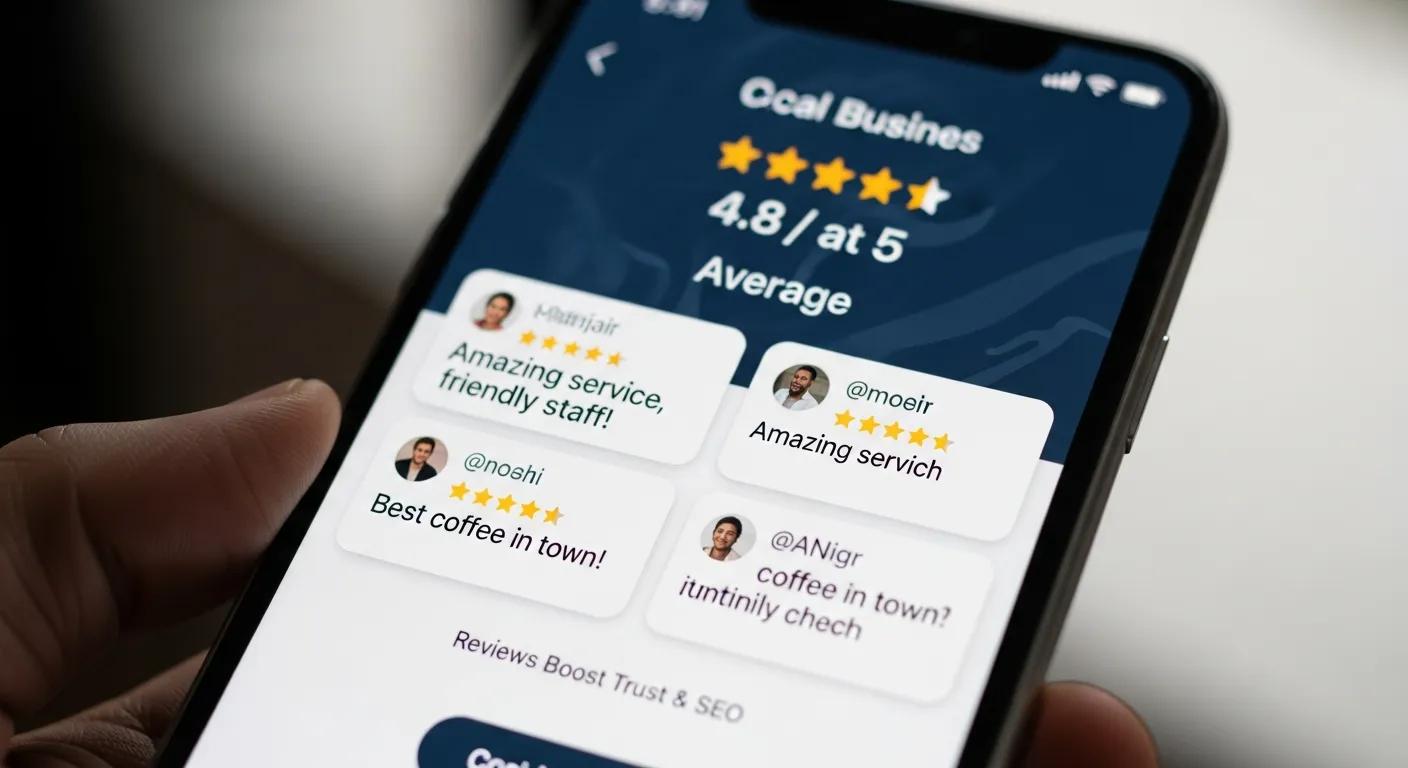
Customer reviews influence buyer decisions and local search performance. Proactive review management strengthens your reputation and can improve local rankings.
How to generate more positive reviews for Launceston SMEs
Try these practical tactics:
- Ask for feedback: Train staff to request a review after a positive interaction or sale.
- Offer compliant incentives: Use modest, platform‑compliant incentives where allowed — always follow the rules.
- Follow up: Send a short, friendly email with a direct link to your review page.
Consistent, genuine reviews make your business appear more trustworthy to customers and search engines.
How reviews influence Google’s local algorithm
Reviews signal trust and relevance to Google. The quality, recency and variety of reviews matter — and responding to feedback shows engagement, which supports your local visibility.
Which on-page SEO fixes give faster local growth in Launceston?
On‑page SEO helps search engines understand your pages and match them to local queries. Prioritise a few high‑impact fixes for quicker wins.
How to integrate local keywords into your website content
Make local keyword use practical and natural:
- Keyword research: Find the terms Launceston customers actually use for your services.
- Strategic placement: Put keywords in page titles, H1S, meta descriptions and key paragraphs to signal relevance.
- Natural flow: Write for people first — keep phrasing natural and avoid stuffing keywords.
Balanced keyword use improves relevance without harming the user experience.
Why build location‑specific landing pages for Launceston suburbs?
Location pages let you match local intent precisely. Create unique content for each suburb — local examples, nearby services and targeted testimonials — so each page answers a specific search need and avoids duplicate content problems.
How AI‑powered SEO can speed local growth for Launceston businesses
AI tools speed up research, content creation and reporting so you can scale local SEO work while staying data‑driven and focused on the changes that move the needle.
How AI helps with local keyword research and content optimisation
AI analyses search trends and user intent to surface high‑potential local keywords and topic ideas. It can suggest content structure and optimisation points that better match what local customers search for, saving time and improving relevance.
Frequently asked questions
What are the key differences between local SEO and traditional SEO?
Local SEO focuses on improving a business’s visibility for geographically relevant searches. Unlike broader SEO, which targets wider audiences, local SEO concentrates on areas and search terms tied to a location. It includes optimising Google Business Profiles, local citations and NAP consistency — important for businesses that rely on foot traffic or local customers.
How can Launceston businesses improve their online reputation through local SEO?
Improve reputation by actively managing reviews and engaging with customers. Encourage satisfied customers to leave reviews on Google and other platforms, respond professionally to feedback, and publish content that addresses common questions and highlights success stories. A strong, engaged online presence builds trust and helps local rankings.
What role does mobile optimisation play in local SEO strategies?
Mobile optimisation is essential: many local searches happen on phones. A mobile‑friendly site with fast load times, easy navigation and clear calls to action keeps visitors engaged and converts better. Google prioritises mobile‑optimised pages, so focusing on mobile improves local visibility.
How can local businesses use social media to support local SEO?
Use social media to raise local awareness: share community news, events, promotions and customer stories. While social signals aren’t direct ranking factors, social activity drives visits, engagement and shares that can lead to backlinks and better visibility over time.
What are effective strategies for local link building in Launceston?
Build local links by partnering with nearby businesses, sponsoring events, supporting local charities, and working with community bloggers or influencers. Create high‑quality, locally relevant content that others want to link to. Active community relationships often result in valuable local backlinks.
How can businesses track the effectiveness of their local SEO efforts?
Monitor KPIs like organic traffic, local search rankings, calls and direction requests from your Google Business Profile, and the number of local leads. Use Google Analytics for user behaviour and conversions, Search Console for search performance, and GBP insights plus review volume to measure local impact.
What is the role of social media in local SEO for Launceston businesses?
Social media builds local recognition and engagement. Post community‑focused content, promotions and customer stories to drive visits and shares. While social signals don’t directly rank you, they can generate traffic and links that support local SEO.
How can local businesses measure the success of their SEO efforts?
Measure success with KPIs: organic traffic, rankings for local keywords, calls and direction requests from Google Business Profile, and the number of local leads. Combine Google Analytics, Search Console and GBP insights to track performance and ROI.
What common mistakes should Launceston businesses avoid in local SEO?
Avoid inconsistent NAP across listings, unclaimed or incomplete Google Business Profiles, ignoring reviews, and skipping local keyword research. Not tracking results also makes it hard to improve — fix the basics first.
How often should businesses update their Google Business Profile?
Update your profile whenever hours, services or promotions change. Post regularly — for example, monthly or around events — refresh photos every few months and reply to reviews promptly to keep the listing active and trustworthy.
What is the impact of mobile optimisation on local SEO?
Most local searches happen on mobile. A responsive, fast site lowers bounce rates and improves conversions. Google favours mobile‑friendly pages, so prioritise speed, simple navigation and clear calls to action for mobile visitors.
Can local SEO strategies differ by industry in Launceston?
Yes. Restaurants should highlight menus, booking links and review volume, while tradespeople benefit from service‑area pages, citation accuracy and local testimonials. Tailor your approach to how your customers search in your industry.